

If you are looking up harga borong kurma hoping for one number, there isn't one. A wholesale price list for dates is a grid: variety down one side, grade and pack size across the top, and a stock column that can change the picture. This guide reads one real grid, line by line, so you can judge any harga borong kurma quote you are sent.
The figures below are the listed prices of one Malaysian wholesaler, checked in November 2026. Treat them as a snapshot for comparison, not a promise of what you will pay next month.
What a wholesale date price list actually contains
This list mixes two kinds of pack. There are 1kg packs, which suit a small shop or a household that goes through dates quickly. Then there are bulk cartons, usually 5kg, plus multi-packet cartons such as 12 packets of 600g or 24 pouches of 200g. The carton price looks frightening next to a 1kg price, so the first habit to build is simple: divide by the weight and compare ringgit per kilo.
The second thing on the list is the grade. Labels such as A, AA, AAA, VIP and Jumbo are each importer's own size sorting, not an international standard, so an "AAA" from one supplier is not automatically the same fruit as an "AAA" from another. Ask for the pack weight and look at the dates themselves before you compare grades across two suppliers.
Grade versus price: one variety, five cartons
Safawi from the Madinah region is a good example because every 5kg grade on this list was in stock when it was checked. Safawi is longer than Ajwa, dark brown to black, soft and chewy.

| Safawi 5kg carton | Listed price | Per kilo |
|---|---|---|
| Premium A No.2 (Mini) | RM80 | RM16.00 |
| Premium A No.1 (Small) | RM95 | RM19.00 |
| Premium AA | RM153 | RM30.60 |
| Premium AAA | RM163 | RM32.60 |
| Premium Jumbo | RM195 | RM39.00 |
Same variety, same carton size, and the top grade costs well over twice the bottom one per kilo. That is the gap a buyer is really choosing across. If your customers buy dates to break fast at home, the smaller grades may be all they want. If the dates go into a hantaran tray or a gift box, size starts to matter and the price climbs with it.
Mariami from Iran, a dark, semi-dry and chewy date, shows the same pattern. The in-stock 5kg cartons were Mariami A Normal at RM75 (RM15.00 a kilo), Mariami AA at RM129 (RM25.80) and Mariami AAA VIP at RM148 (RM29.60). Two other 5kg Mariami lines on the same list, A no.2 at RM68 and AA (No.2) at RM80, were out of stock.
Does a bigger pack mean a lower price per kilo?
Usually, on this list, but read the grade names closely before you assume it. Here are five in-stock pairs of a 1kg pack and a bulk pack of the same variety.
| Variety | 1kg pack | Bulk pack | Bulk per kilo |
|---|---|---|---|
| Ajwa | AAA VIP (Large) RM44 | Premium VIP AAA 5kg RM175 | RM35.00 |
| Safawi | A RM35 | Premium A No.1 (Small) 5kg RM95 | RM19.00 |
| Safawi | AAA Jumbo RM45 | Premium Jumbo 5kg RM195 | RM39.00 |
| Mariami | AAA RM40 | AAA VIP 5kg RM148 | RM29.60 |
| Medjool (Palestine) | Jumbo 900g box RM70 (RM77.78/kg) | Premium Jumbo 5kg RM280 | RM56.00 |
Notice that the names do not always match. "Safawi A" in a 1kg pack and "Safawi Premium A No.1 (Small)" in a 5kg carton may not be the same sort, so part of that per-kilo drop could be a size difference rather than a bulk discount. When you ask a supplier for a quote, ask whether the 1kg and the carton come from the same grade.
For more on cartons specifically, the 5kg carton price list by grade on this site goes through every 5kg line in detail.
Variety sets the floor, and it is not always the one you expect
Kurma Ajwa did not top this list. The cheapest in-stock Ajwa carton, Premium A No.1 (Small) 5kg at RM115, worked out at RM23.00 a kilo, which is cheaper per kilo than Mariami AA or any Safawi grade above A No.1.
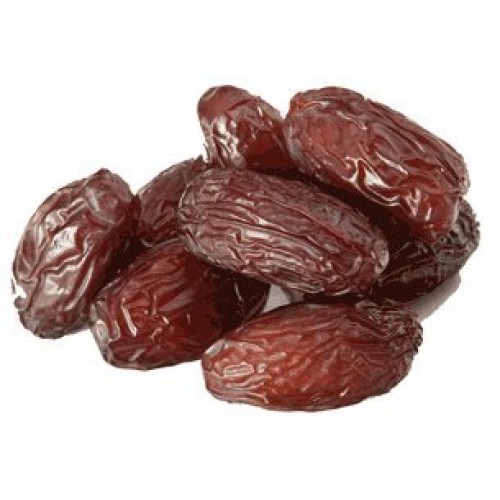
Medjool was the real outlier. Its in-stock packs from Palestine ran from RM56.00 to RM77.78 a kilo, and every one of them cost more per kilo than any in-stock Ajwa, Safawi or Mariami pack. Medjool is large, very soft and rich, and the FAO's date palm handbook gives a hint of why it is costly at source: it describes Medjool picking as "very labour-intensive and costly", justified by "the high price fetched by this fruit".
At the other end, the lowest in-stock price per kilo on the whole list was Mariami A Normal 5kg at RM15.00, followed by Safawi A No.2 (Mini) 5kg at RM16.00 and a carton of Deglet Noor on the stem from Tunisia or Algeria (12 packets of 400g) at RM88, or RM18.33 a kilo.

Stock status belongs in the price
A cheap line you cannot buy is not a price. On this list, several cheap cartons were marked out of stock at the time of checking: Ajwa Premium A No.2 (Mini) 5kg at RM95 (RM19.00 a kilo), Mariami A no.2 5kg at RM68 and all three Rotab 12-packet cartons of 600g, which would have been about RM12 a kilo. If a supplier's headline price comes from a line like these, ask what is actually ready to ship before you plan around it.
Timing: Ramadan and the other busy weeks
Demand for dates in Malaysia peaks before and during Ramadan, and Hari Raya, weddings, kenduri and umrah gifts are other busy times. Every date sold here is imported, and most Gulf and Middle-East dates are harvested from late summer to autumn, with new-season stock reaching Malaysia some weeks later.
What that means for a buyer is practical. Ask for your Ramadan quote well ahead, confirm stock rather than price alone, and keep the quote in writing with the grade and pack weight stated. A snapshot like the one above tells you nothing about how a supplier's prices move in the busy weeks, so compare quotes taken on the same day.
Reading the label and the quote
The FAO handbook notes that "in most importing countries, the law demands that data such as weight, country of origin, quality and date of expiry, appear on the package". Those four details are a fair checklist for any carton you are quoted. If a price list shows only "Kurma AAA 5kg", you have not been told enough to compare it with anything.
Quality defects move price as well as size. The same handbook says skin separation in Medjool is "significantly lowering the price for export fruit". Ask to see a sample when a gap between two cartons looks too good.
If a quote calls the dates organic or ethically sourced, ask who certified it. Our piece on checking ethical and organic claims from a kurma wholesaler covers organic labelling and Fairtrade certification. And if you plan to resell, work out your own margin from the per-kilo price before you trust any margin column a supplier prints; this note on recalculating the margin column shows how two ways of counting profit give two very different numbers.
A short checklist before you order
- Convert every price to ringgit per kilo, including multi-packet cartons.
- Compare the same grade name from the same supplier, and ask for the pack weight.
- Check stock on the exact line you want, not just the variety.
- Look for weight, country of origin, quality and expiry date on the carton.
- Get delivery cost added to the quote so you compare landed prices, not carton prices.
FAQ
What is the cheapest date to buy in bulk?
In the harga borong kurma list checked in November 2026, the cheapest in-stock carton per kilo was Mariami A Normal 5kg at RM75, or RM15.00 a kilo. Cheaper lines existed but were out of stock.
Is a 5kg carton always cheaper than five 1kg packs?
Not by default. On this list the bulk pack was cheaper per kilo in every in-stock pair, but some pairs used different grade names, so confirm the grade is the same before treating the gap as a pure bulk saving.
Why do two "AAA" cartons from different suppliers cost different amounts?
Grades are each importer's own size sorting. One supplier's AAA can be another's AA, so compare the fruit and the weight, not the letters.
The fairest way to read harga borong kurma is per kilo, per grade and per in-stock line. Do that, and two suppliers' lists become comparable in a few minutes.